Keystone Health Blog
New Tools, Same Philosophy: Why We Added the Sled, Flywheel, and Keiser Equipment
Posted March 16, 2026

Author: Fraser Sprigings
Physiotherapist
Whether someone is rebuilding strength after injury, preparing for ski season, or simply wanting to feel more capable in their body, these tools help us train strength, control, and resilience in practical ways.
The Sled (AKA The Tank): Strength Without Joint Stress
How it is used
Sled pushing and pulling involve driving the body forward or backward while moving resistance across the floor. Load can be adjusted from very light (rehabilitation and gait retraining) to very heavy (power and conditioning).The Sled is a Wheeled ‘Tank’ that uses magnetic resistance that is adjustable with a flip of a lever.
Why it matters
Unlike traditional lifting, sled work minimizes eccentric loading, meaning there is less muscle soreness and reduced joint stress. This makes it ideal for rehabilitation, return-to-sport progressions, and high-frequency conditioning.
Benefits
- Builds lower-body strength and work capacity
- Reinforces efficient walking and running mechanics
- Improves acceleration and power for sports
- Allows intense training with lower joint strain
Why we chose it
The sled allows clients to train hard without excessive soreness or impact. For individuals returning from knee, hip, or Achilles injuries, it provides a safe way to rebuild strength and confidence while maintaining conditioning.
Pushing or pulling are great functional movements that train a huge number of muscles in a coordinated fashion.
Flywheel Training: Strength Through the Full Movement Cycle
How it is used
Flywheel systems uniquely use rotating inertia rather than standard weight. The harder you push, the more resistance the device returns, particularly during the lowering phase of the movement.
Why it matters
This creates what is called eccentric overload, where muscles work harder while lengthening. Eccentric training has been shown to improve strength, power, and muscle function while enhancing tendon resilience and injury prevention capacity [1][2].
Benefits
- Builds strength and power efficiently
- Enhances tendon and muscle resilience
- Improves deceleration and change-of-direction control
- Useful for rehabilitation and injury prevention
Why we chose it
Flywheel training bridges rehabilitation and performance. It allows controlled loading for injury recovery while also providing high-level strength and power development for athletes. Eccentric loading is experienced with downhill skiing, running downhill and landing from a jump or drop. Working with these types of force at the gym better transfers your training into these types of activities and sports you do outdoors.
Keiser Air-Powered Equipment: Precision Resistance for Every Body
How it is used
Keiser machines use compressed air instead of weight stacks. Resistance can be adjusted in very small increments and moved quickly and smoothly.
Why it matters
Pneumatic resistance allows controlled, high-velocity movement with reduced impact and smoother resistance through the full range of motion. The cable on the Keiser machine is extremely long, allowing for compound and complex movement patterns to be performed compared to conventional cable pull machines.
Benefits
- Precise resistance adjustments for rehab and strength progressions
- Safe power training at higher speeds
- Reduced joint stress compared to traditional weight stacks
- Smooth resistance across the entire movement
Why we chose it
These machines support both rehabilitation precision and athletic performance. For someone recovering from surgery, small changes in resistance matter. For an athlete, the ability to train safely for speed and power is equally important.
Training for Real Life and Real Performance
The sled helps build capacity without excessive stress.
The flywheel strengthens the body’s braking system and resilience.
Keiser equipment allows precise high (or low) velocity, joint-friendly strength and power training.
Together, they support the full continuum from rehabilitation to performance.
If you are curious about how these tools might fit into your training or recovery, ask one of our team members. We are always happy to explain the why behind what we do.
References
[1] Beato, M., Dello Iacono, A., & Coratella, G. (2024). Effects of flywheel resistance training on strength and physical capacities: A systematic review. Sports Medicine. https://doi.org/10.1007/s40279-023-01979-x
[2] Buonsenso, A., Centorbi, M., Di Martino, G., et al. (2023). Flywheel training effectiveness on strength, power and sport performance: A systematic review. Journal of Functional Morphology and Kinesiology, 8(2), 63. https://doi.org/10.3390/jfmk8020063
Explore more from the Keystone Health Blog

Couples Counselling
Consider couples’ counselling when recurring arguments stall, emotional intimacy fades, or a breach of trust occurs. Don’t wait for a crisis—therapy acts as proactive relationship maintenance to rebuild connection, improve communication, and safely navigate major life transitions.
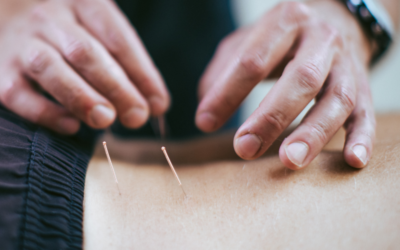
Understanding Needling in Physiotherapy: Acupuncture vs. Dry Needling
Learn why we use needling techniques at Keystone, and how these tools address pain, muscle dysfunction, and recovery.
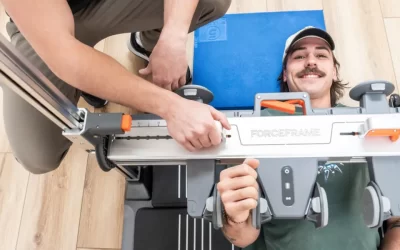
Measuring What Matters
Effective rehabilitation and performance planning begins with understanding where you are today. Learn more about how we use quantifiable benchmarks to guide rehabilitation and return-to-activity decisions.