Keystone Health Blog
Deep Pressure Touch & Somatic Regulation: Why We Use Weighted Tools in Counselling

Author: Keystone Clinical Health Team
When entering a counselling session, your nervous system can play an important role in how you experience and process thoughts, emotions, and difficult experiences.
At Keystone Health, you may notice a quiet, intentional addition to our clinical counselling space: a weighted sloth stuffed animal. While simple in appearance, it can serve as a practical sensory tool designed to support grounding, emotional regulation, and a sense of comfort during therapy.
Weighted tools are based on the concept of deep pressure stimulation (DPS), a form of sensory input that has been studied for its potential calming effects. Here is a look at how deep pressure may influence the body, why weighted tools can be useful in counselling, and what current research tells us about their effectiveness.
The Physiology of Deep Pressure Stimulation (DPS)
Weighted blankets, lap pads, and similar tools provide deep pressure stimulation (DPS) through gentle, distributed pressure on the body. Deep pressure has long been used within occupational therapy and sensory-based approaches to support emotional and physical regulation.
Although the precise physiological mechanisms are still being studied, research suggests that weighted tools may help some individuals reduce feelings of anxiety and physiological arousal.
How it may work in the body:
- Proprioceptive Input: Pressure and weight provide sensory information to the body through the proprioceptive system, which helps the brain understand body position, movement, and physical orientation.
- Calming Sensory Input: Consistent, predictable pressure may provide a calming sensory experience for some people. Rather than assuming that deep pressure directly “switches on” the parasympathetic nervous system, current evidence suggests that weighted tools may support relaxation and emotional regulation through a combination of sensory and psychological mechanisms.
- Reduced Physiological Arousal: Some clinical research has found measurable changes associated with weighted-tool use. In one study involving adults in an inpatient mental health setting, participants who used weighted blankets or a weighted lap pad experienced significant reductions in both self-reported anxiety and pulse rate following the intervention.
Responses to deep pressure are individual. Some people find weighted tools calming and grounding, while others may not find the sensation helpful or comfortable.
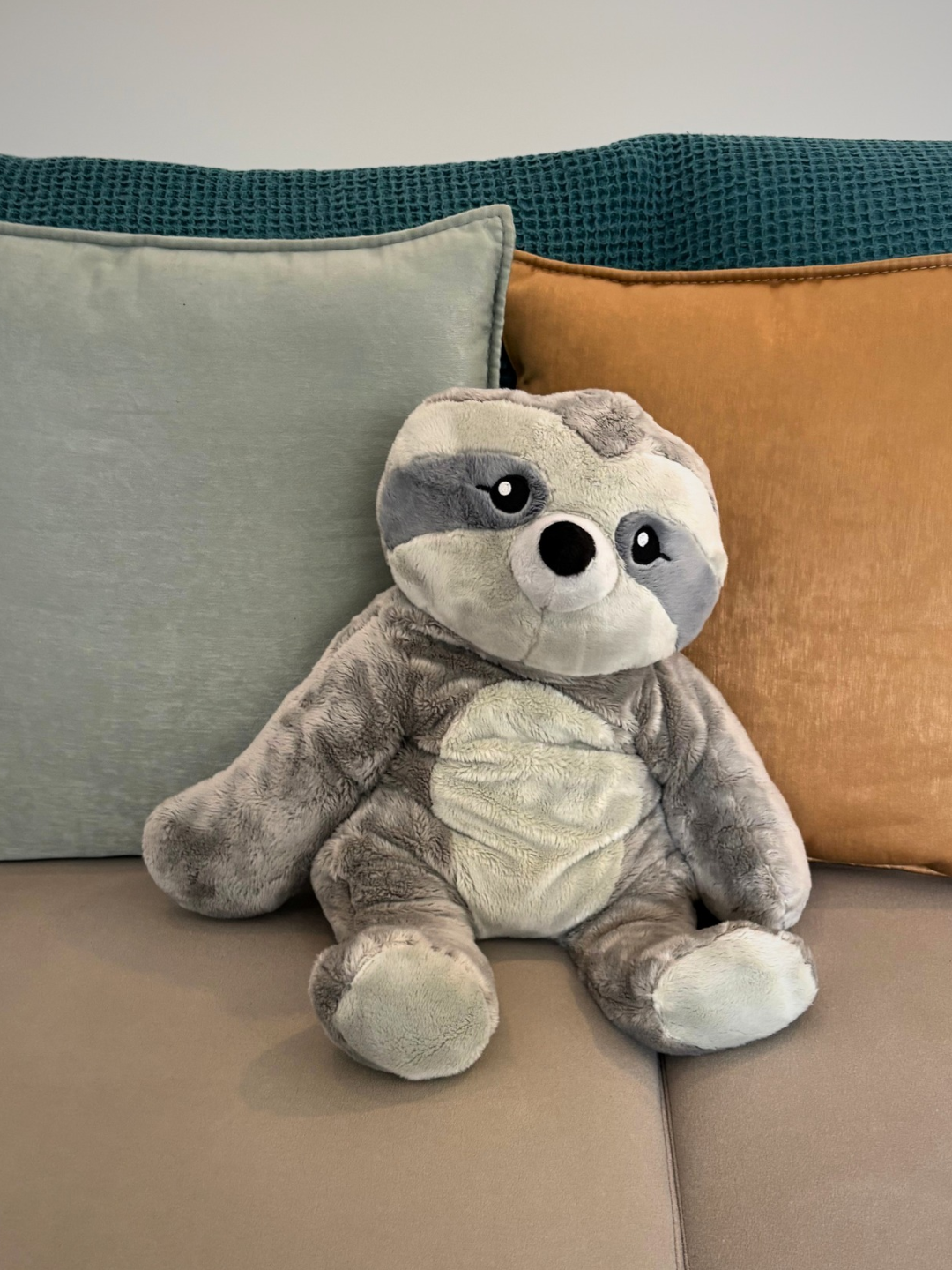
Keystone’s sloth stuffed animal, a weighted tool designed to support our counselling sessions.
Applications in Clinical Counselling
During therapy, discussing trauma, intense emotions, anxiety, or stressful experiences can increase emotional and physiological arousal. This can sometimes make it more difficult to remain grounded, focused, and connected to the present moment.
For clients who find deep pressure comfortable, incorporating a weighted tool into counselling may provide several potential benefits:
- Somatic Grounding During Difficult Conversations: Holding a weighted object or placing it comfortably on the lap can provide a tangible physical sensation to focus on. This may help support present-moment awareness during emotionally challenging conversations.
- Supporting Regulation During Anxiety: The consistent sensory input provided by a weighted tool may feel calming for some individuals and can be used alongside strategies such as paced breathing, mindfulness, or other emotional regulation techniques.
- Supporting Body Awareness: Sensory tools can provide a clear physical point of reference, potentially helping clients notice bodily sensations and reconnect with their physical experience in a controlled and comfortable way.
- Restoration of Control: Traumatic events are often characterized by a loss of control. The sloth is one of the ways in which someone can engage in restoring a sense of control, for example, choosing how and where to receive sensory input, naturally adjusting the pressure and duration themselves. It also introduces them to a self-regulation tool they can access between sessions, using pillows or blankets they have at home.
- Emotional exploration: In cases where it wasn’t safe enough to express emotions in past situations, there could be opportunities to explore these using the sloth to start out. For example, having it turn away or hide might feel less charged than having the client do that behaviour. Or moving the limbs in a particular way might provide new insights into thwarted responses that can be explored and restored.
- Decrease physical and emotional pain: Researchers are making significant strides in understanding how pain is created in the brain. Brain scans have shown that physical pain and emotional pain light up the same areas in the brain. Further studies have shown that soothing touch effectively turns down the volume of the pain alarm. The soft fur and gentle weight of the sloth are ways that people can access soothing sensations external to their own body. Hugging a weighted plushie can also stimulate the release of oxytocin and serotonin – hormones associated with a feeling of relaxation and well-being- while reducing cortisol levels – the stress hormone. And we could all use a little less stress in our modern lives!
All of the above are helpful ways of building a bigger container to increase capacity to be able to process thoughts, feelings, emotions, and sensations. Importantly, a weighted tool is not a treatment for anxiety or trauma on its own. It is one optional resource that can be incorporated into a broader therapeutic approach when appropriate for the individual.
Evidence & Scientific Research
Research into weighted blankets and other deep-pressure tools continues to develop. Current evidence is encouraging, particularly regarding anxiety, but researchers also emphasize that more high-quality studies are needed to better understand who benefits, how much pressure is most appropriate, and the mechanisms responsible for these effects.
1. Weighted Blankets & Anxiety
A 2020 systematic review examined research on weighted blankets as a form of deep pressure stimulation. The authors found that weighted blankets may be an appropriate therapeutic tool for reducing anxiety in certain settings and populations. However, they also noted that the overall evidence base was limited and that additional research was needed.
Research: Eron et al. (2020), American Journal of Occupational Therapy
Weighted Blanket Use: A Systematic Review
2. Weighted Tools in Mental Health Care
A 2021 study examined weighted blankets and weighted lap pads among adults experiencing anxiety in an inpatient mental health setting. Participants using the weighted intervention experienced statistically significant reductions in both anxiety scores and pulse rate compared with those who did not use a weighted tool.
The researchers concluded that weighted blankets may offer a safe and potentially effective option for helping some individuals manage anxiety in mental health settings.
Research: Becklund et al. (2021), Journal of Integrative Medicine
Using Weighted Blankets in an Inpatient Mental Health Hospital to Decrease Anxiety
3. Current Evidence on Weighted Blankets & Mental Health
A 2024 systematic review and meta-analysis examined nine studies involving 553 psychiatric inpatients and outpatients. Across six studies reporting anxiety outcomes, weighted blankets were associated with significant improvements in anxiety symptoms compared with control conditions.
The authors concluded that weighted blankets can be helpful in reducing anxiety among psychiatric patients, while also emphasizing limitations in the existing research, including small sample sizes, differences between studies, and a need for additional high-quality randomized controlled trials.
Research: Wong et al. (2024), Journal of Psychiatric Research
A Structured Approach to Mental Health
At Keystone Health, tools like our weighted sloth are used intentionally as part of a broader, evidence-informed approach to counselling. They are not intended to replace established therapeutic interventions, nor will every sensory strategy be appropriate for every person.
Instead, a weighted tool can provide another option for clients who find deep pressure calming or grounding. Whether someone is working through anxiety, stress, difficult emotions, or simply trying to feel more present during a counselling session, small sensory supports can sometimes make the therapeutic environment feel more comfortable and manageable.
Our goal is to create a counselling environment where clients have access to thoughtful, practical tools that support their individual needs and complement the therapeutic process.
References
Becklund, A. L., Rapp-McCall, L., & Nudo, J. (2021). Using weighted blankets in an inpatient mental health hospital to decrease anxiety. Journal of Integrative Medicine, 19(2), 129–134. https://doi.org/10.1016/j.joim.2020.11.004
Eron, K., Kohnert, L., Watters, A., Logan, C., Weisner-Rose, M., & Mehler, P. S. (2020). Weighted blanket use: A systematic review. American Journal of Occupational Therapy, 74(2). https://doi.org/10.5014/ajot.2020.037358
Wong, S., Fabiano, N., Luu, B., Seo, C., Gupta, A., Kim, H. K., Shorr, R., Jones, B. D. M., Mak, M. S. B., & Husain, M. I. (2024). The effect of weighted blankets on sleep quality and mental health symptoms in people with psychiatric disorders in inpatient and outpatient settings: A systematic review and meta-analysis. Journal of Psychiatric Research, 179, 286–294. https://doi.org/10.1016/j.jpsychires.2024.09.027
Explore more from the Keystone Health Blog

Why Men Distance Themselves in Relationships—and How to Break the Pattern
Learn why men emotionally withdraw in relationships, how pursuit-withdrawal cycle develops, and how couples can build connection again.

Step-by-Step Concussion Return-to-Sport & Work Protocol
Learn how graded activity and active rehabilitation supports concussion recovery and help you safely return to work, daily life and exercise.
The Metabolic Cascade: What Happens to the Brain After a Concussion?
When a head impact or rapid deceleration force occurs, the damage isn’t structural like a skull fracture or brain bleed—it is functional. At the center of a concussion is a complex biological process known as the neurometabolic cascade.