
Keystone Health Blog
“Valgus” – The 4 Letter Word of the Ski & Snowboard Industry
Posted March 12, 2026

Author: Fraser Sprigings
Physiotherapist
Valgus isn’t a word you’ll hear underneath the chair lifts or in the maze awaiting the gondola.
But when you see it happen in a ski or snowboard crash, you’ll know by the unsettling visceral response your body shutters.
Someone’s day just went valgus.
What is Valgus and why is it a 4 letter word?
Valgus is a medical term to say that something (like a limb) is angled away from midline.
This term is frequently used when describing the mechanism of a knee injury. An overwhelming number of ski crashes resulting in a torn ACL, have a component of valgus added to the mixture of forces being applied to the leg (54%) [1].
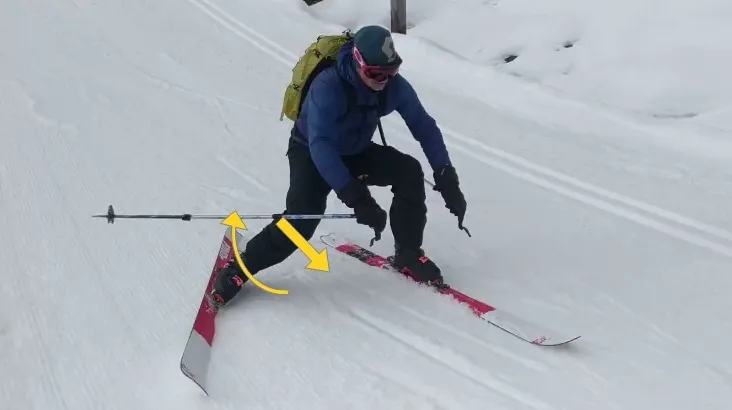
Example 1 : Falling either forwards or backwards as the knees buckles inwards (the shin is now moving VALGUS) as the inner edge of the ski catches rotating the lower leg outwards.
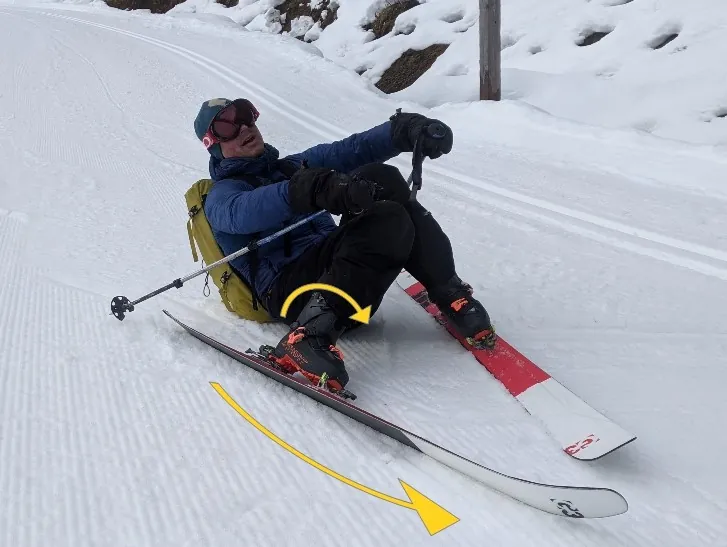
Example 2 : Called the ‘phantom foot’ mechanism[2] which occurs as the skier falls backward in between their skis as the inside edge of the downhill ski catches the snow’s surface sliding the ski across midline of the body(Valgus force on knee with lower leg rotating inwards)
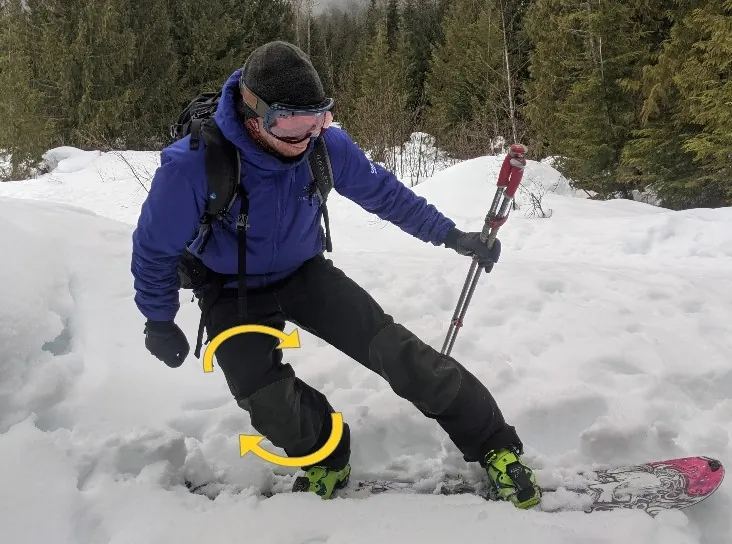
Example 3 : A Snowboard crash resulting in landing a jump or drop in the ‘back seat’ forcing the quads to contract hard and the knee collapsing towards midline of the body[3].
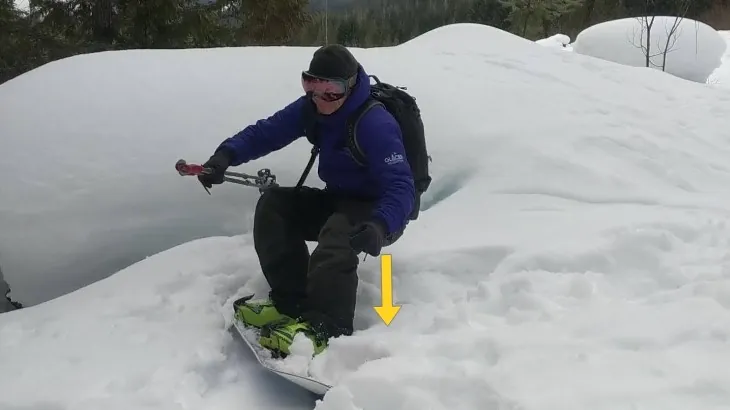
How to avoid things going VALGUS
To reduce the amount of valgus subjected to the knee, two critical factors need to be addressed. The strength to correct the valgus problem and the awareness (proprioception) to detect when valgus is happening.
Strength: Endurance and Power are both key. The stabilizing muscles must be able to create power at a moment’s notice to protect the knee. They also have to be able to last for the entire day of riding.
The joint of the knee should bend forwards and back (flexion and extension) . For the knee to collapse into a valgus angle the thigh and shin rotate towards the midlines of the body. If your hip/core is strong enough to stop the thigh from rotating inwards and the ankle/foot is strong enough to stop the shin from rotating inwards the knee has no choice but to continue happily bending forwards and back.
Strong hips alone will not stop the knee from collapsing into valgus[4]. It is important to have the kinesthetic awareness to ensure the stabilizing muscles correctly fire in a time of need.
To improve your ski and snowboarding agility it is wise to train quick and awkward movements that you may be exposed to when riding within a safe controlled environment (dry land training). There is no need to be strong if your body doesn’t know when it is at risk of valgus loading and must protect the knee.
References
[1] Shea KG, Archibald-Seiffer N, Murdock E, et al. Knee injuries in downhill skiers: a 6-year survey study. The Orthopaedic Journal of Sports Medicine. 2014;2:2325967113519741.
[2] Ettlinger CF, Johnson RJ, Shealy JE. A method to help reduce the risk of serious knee sprains incurred in alpine skiing. The American Journal of Sports Medicine. 1995;23:531-537
[3] Sachtleben TR: Snowboarding injuries. Current Sports Medicine Reports. 2011;10(6):340-344.
[4] Thijis Y, Van Tiggelen D, Willems T, De Clercq D, Witvrouw E. Relationship between hip strength and frontal plane posture on the knee during a forward lunge. British Journal of Sports Medicine. 2007 Nov;41(11):723-7
Explore more from the Keystone Health Blog
New Tools, Same Philosophy
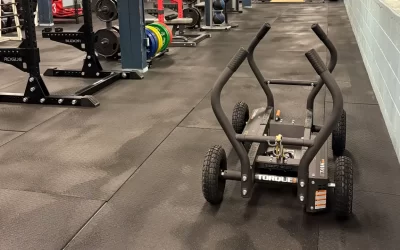
Over the past year, we have added a few pieces of equipment to the gym floor that may look unfamiliar at first glance: a sled, a flywheel training system, and Keiser air-powered resistance machines. Learn why we chose these tools for Keystone!
Measuring What Matters
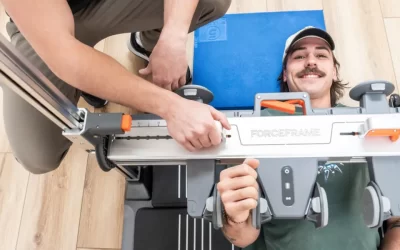
Effective rehabilitation and performance planning begins with understanding where you are today. Learn more about how we use quantifiable benchmarks to guide rehabilitation and return-to-activity decisions.

Medical Expense Tax Credit in British Columbia
Did you know BC residents who incur out-of-pocket healthcare expenses may be eligible to claim certain costs under the Medical Expense Tax Credit (METC)?