
Keystone Health Blog
Concussion Myths & Modern Recovery Facts
Posted September 20, 2026

Author: Keystone Clinical Health Team
Myth 1: Do I need to hit my head to get a concussion?
The Reality:
You do not need a direct blow to the head to sustain a concussion.Current consensus defines a concussion as a traumatic brain injury induced by forces transferred to the head, neck, or body. Any rapid acceleration or deceleration force, such as a whiplash motion from an abrupt mountain bike stop, a heavy body tackle, or a hard fall onto your hip while skiing, causes the brain to move rapidly inside the skull.
The force transferred through your spine and torso is often more than enough to create the shear stress required to temporarily disrupt brain cell function.
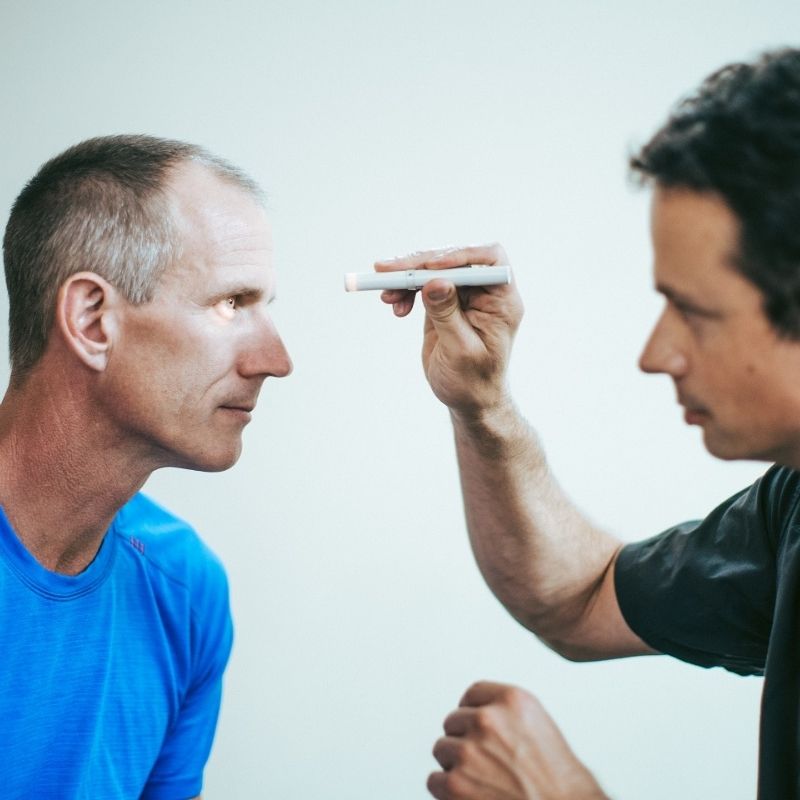
Myth 2: I didn’t lose consciousness. Could I still have a concussion?
The Reality:
Yes. Research consistently demonstrates that fewer than 10% of all concussions result in a loss of consciousness. When an impact causes structural damage, such as a bone fracture or a brain bleed, it can be identified on standard neuroimaging like X-rays or CT scans. Concussions are different. Standard imaging looks for structural tissue tears or bleeding; it cannot detect a concussion. Concussions cause a functional disturbance at the cellular level. Biomechanical forces temporarily disrupt chemical communication, local blood flow, and cellular energy regulation in the brain. Because the physical structure of the brain remains intact, you do not need to lose consciousness to experience functional impairment. Rather than looking for loss of consciousness, research highlights observing functional symptoms across four main categories:- Physical: Headaches, dizziness, light or noise sensitivity, nausea, balance issues, or neck tightness.
- Cognitive: Brain fog, feeling slowed down, difficulty focusing, or slowed processing speed.
- Emotional: Uncharacteristic irritability, sudden anxiety, or emotional volatility.
- Sleep: Drowsiness, difficulty sleeping, or sleeping significantly more or less than usual.
Myth 3: Should I wake someone up every 2 hours after a concussion?
The Reality:
No. Interrupting sleep every couple of hours is unnecessary and can actually hinder recovery. This practice originated as a way to monitor patients for signs of severe, life-threatening brain bleeds or coma. However, as long as a medical professional has evaluated the individual and ruled out emergency red flags, uninterrupted sleep is critical. Sleep is the brain’s primary window for cellular repair and energy restoration. Waking someone up every two hours deprives them of essential sleep cycles, which can worsen concussion symptoms like fatigue, headaches, brain fog, and irritability the next day.Myth 4: Should I sit in a dark room until my concussion symptoms completely go away?
The Reality:
Strict, prolonged rest, often referred to as “cocoon therapy,” is an outdated practice that research suggests can actually delay recovery. Historically, protocols recommended locking individuals in a dark room without light, screens, or social interaction until every symptom resolved. Current clinical research demonstrates that extended isolation leads to physical deconditioning, higher symptom sensitivity, autonomic nervous system dysfunction, and emotional distress.What Research Suggests Management Should Look Like
The latest international consensus statements emphasize relative rest rather than complete sensory deprivation.
- The First 24 to 48 Hours (Relative Rest): Research suggests a brief period of relative cognitive and physical rest immediately following injury. This involves stepping back from strenuous workouts, heavy physical labour, intense screen time, and demanding cognitive workloads. However, complete isolation is not recommended. Light, daily routines around the house, such as short walks or casual conversation, that do not cause a sharp spike in symptoms are safe and encouraged.
- After 48 Hours (Gradual, Sub-Symptom Activation): Research strongly indicates that after the initial 24 to 48 hours, remaining completely inactive is counterproductive. Individuals, even those recovering from minor concussions, should begin introducing light, sub-symptom physical activity, such as gentle walking or stationary cycling, and gradual daily activities.
Don’t Wait It Out in the Dark
Selected Research & Evidence
Leddy, J. J., et al. (2019). Early Subthreshold Aerobic Exercise for Sport-Related Concussion: A Randomized Clinical Trial. JAMA Pediatrics, 173(4), 319–325. Read Study
Patricios, J. S., et al. (2023). Consensus statement on concussion in sport: the 6th International Conference on Concussion in Sport held in Amsterdam, October 2022. British Journal of Sports Medicine, 57(11), 695–711. Read Consensus Statement
Schneider, K. J., et al. (2023). Rest and exercise early after sport-related concussion: a systematic review and meta-analysis. British Journal of Sports Medicine, 57(12), 762–770. Read Systematic Review
Podcast Resource
For a deeper discussion on concussion recovery timelines and active rehabilitation strategies, listen to Fraser Sprigings on Episode 44: Beyond the Bump – Concussion Recovery with Cronometer. Listen to the Episode Here
Explore more from the Keystone Health Blog

Why Men Distance Themselves in Relationships—and How to Break the Pattern
Learn why men emotionally withdraw in relationships, how pursuit-withdrawal cycle develops, and how couples can build connection again.

Step-by-Step Concussion Return-to-Sport & Work Protocol
Learn how graded activity and active rehabilitation supports concussion recovery and help you safely return to work, daily life and exercise.
The Metabolic Cascade: What Happens to the Brain After a Concussion?
When a head impact or rapid deceleration force occurs, the damage isn’t structural like a skull fracture or brain bleed—it is functional. At the center of a concussion is a complex biological process known as the neurometabolic cascade.