
Keystone Health Blog
Why Post-Concussion Headaches & Dizziness Persist (And How to Treat Them)
Posted September 27, 2026

Author: Keystone Clinical Health Team
Following a concussion or hard head impact, persistent dizziness and lingering headaches are among the most frustrating symptoms people experience. When these issues don’t resolve after a few weeks, it is natural to worry that your brain remains in a continuous state of active injury.
In reality, concussion recovery can involve more than just time and rest. Persistent headaches and dizziness often stem from secondary, interconnected physical systems that were affected during the initial impact, including the neck (cervical spine), the visual and vestibular (inner ear) balance networks, and autonomic blood pressure regulation.
Because these systems overlap, current clinical guidelines recommend a multimodal assessment when symptoms persist, shifting the focus from passive waiting toward targeted, progressive rehabilitation.
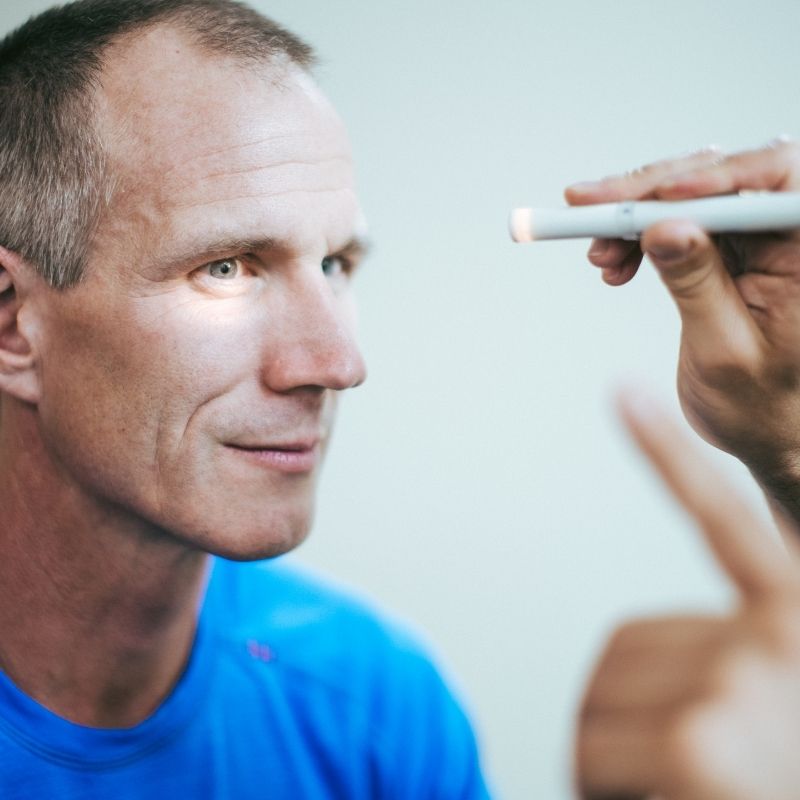
Why Headaches and Dizziness Can Persist
Importantly, clinical symptom recovery does not necessarily occur on the same timeline as underlying physiological recovery. Research using advanced fluid biomarkers and neuroimaging suggests that some neurobiological changes may persist beyond apparent clinical recovery, although these measures are not currently recommended for routine clinical decision-making (Tabor et al., 2023).
Persistent symptoms can also be influenced by cervical, vestibular, visual, autonomic, sleep, and psychological factors. This is why contemporary concussion management emphasizes identifying the specific physical contributors to an individual’s symptoms rather than treating persistent recovery as a single condition (Patricios et al., 2023).
When assessing persistent dizziness and headaches, clinical evaluation focuses on three primary physical contributors.
1. The Cervical Spine (Neck)
A force capable of producing a concussion places significant mechanical stress on the cervical spine. Rapid acceleration and deceleration during a mountain bike crash, ski fall, heavy tackle, or other impact can produce neck injuries alongside a concussion.
Cervical symptoms are common following a head impact, particularly among people who develop persistent issues. The upper neck contains a dense network of specialized sensory receptors that inform the brain of head position in space. When joints or soft tissues become stiff, inflamed, or guarded, altered positional signals sent to the brain can result in:
-
- Cervicogenic Dizziness: A lightheaded, floating, or unsteady sensation of spatial disorientation.
- Cervicogenic Headaches: Dull, aching pain originating at the base of the skull that radiates forward over the top of the head or behind the eyes.
2. The Visual and Vestibular Systems
Your sense of balance relies on constant coordination between your eyes (visual system), inner ear balance organs (vestibular system), and body joints (proprioception).
An impact can disrupt how the brain integrates signals across these sensory networks. When visual tracking and inner ear balance reflexes are out of sync, individuals often experience:
-
- Visual Motion Sensitivity: Discomfort, fatigue, or heightened dizziness in busy visual environments like grocery stores or crowded spaces.
- Ocular Motor Fatigue: Eye strain, difficulty focusing on screens, or trouble shifting gaze quickly between targets.
- Gaze Instability: A sensation that the surrounding environment bounces, lags, or swims when turning the head.
3. Autonomic Nervous System Dysregulation
An impact can temporarily alter the autonomic nervous system, which subconsciously regulates heart rate, vascular tone, and blood pressure.
When autonomic control is altered, blood flow adjustments during changes in body position or physical exertion can lag, leading to:
-
- Postural Lightheadedness: Feeling faint, dizzy, or lightheaded when standing up quickly.
- Exercise Intolerance: A predictable spike in headache intensity or dizziness as soon as heart rate increases past a specific threshold.
The Value of Integrated, Collaborative Care
Addressing these interconnected systems requires a collaborative clinical evaluation:
-
- Physiotherapy: Evaluates upper cervical spine joint mechanics, tissue irritability, and neck mobility to restore normal movement patterns.
- Visual and Vestibular Screening: Assesses gaze stability and eye movement control to guide targeted, progressive tracking exercises.
- Controlled Sub-Symptom Aerobic Conditioning: Uses objective gym equipment, such as stationary bikes or treadmills, to safely condition the autonomic nervous system without triggering symptom spikes.
Identifying the exact physical system driving your symptoms shifts recovery from passive waiting to structured, measurable progress.
Selected Research & Evidence
Patricios, J. S., et al. (2023). Consensus statement on concussion in sport: the 6th International Conference on Concussion in Sport held in Amsterdam, October 2022. British Journal of Sports Medicine, 57(11), 695–711. Read Consensus Statement
Schneider, K. J., et al. (2021). Rest and exercise early after sport-related concussion: a systematic review and meta-analysis. British Journal of Sports Medicine, 55(20), 1135–1142. Read Study on PubMed
Tabor, J. B., Brett, B. L., et al. (2023). Role of biomarkers and emerging technologies in defining and assessing neurobiological recovery after sport-related concussion: a systematic review. British Journal of Sports Medicine, 57(12), 789–797. Read Systematic Review
Podcast Resource
For a deeper look at how integrated clinical care addresses cervical spine and vestibular components in recovery, listen to Fraser Sprigings on Episode 44: Beyond the Bump – Concussion Recovery with Cronometer. Listen to the Episode Here
Explore more from the Keystone Health Blog

Why Men Distance Themselves in Relationships—and How to Break the Pattern
Learn why men emotionally withdraw in relationships, how pursuit-withdrawal cycle develops, and how couples can build connection again.
Step-by-Step Concussion Return-to-Sport & Work Protocol
Learn how graded activity and active rehabilitation supports concussion recovery and help you safely return to work, daily life and exercise.
The Metabolic Cascade: What Happens to the Brain After a Concussion?
When a head impact or rapid deceleration force occurs, the damage isn’t structural like a skull fracture or brain bleed—it is functional. At the center of a concussion is a complex biological process known as the neurometabolic cascade.